Used Refrigerated Truck Bodies in South Africa: What the Rules Actually Allow
Importing a used refrigerated body into South Africa needs an ITAC permit that is rarely granted. Real local prices and the 12-point inspection checklist.
South Africa · Buyer Guide
Used Refrigerated Truck Bodies in South Africa: What the Rules Actually Allow
The short version: South Africa has a real, liquid market for used refrigerated bodies — a bare 6.8 m body with electric standby was listed at R 45,000 in October 2026. But importing a second-hand body from abroad is a different matter. Under the ITAC import guidelines, permits for used heavy-truck spares are issued only where no similar or substitute part is available locally, and the import of used commercial truck chassis is prohibited outright. A new body sits outside those import controls and pays duty only. This guide sets out the rules, the real local prices, and how to tell whether a used body is worth its asking price.
1. Used body and used truck are governed by two different rulebooks
Buyers often assume that because a body is “just a box”, it escapes the vehicle import controls that make used trucks almost impossible to bring into South Africa. That assumption is only half right, and the half that is wrong is expensive.
Used complete trucks: permits are not issued
The ITAC import guidelines are explicit. For used buses, trucks, taxis and coaches, “stringent import control measures are, therefore, maintained and no permits are issued for the importation of used or second-hand vehicles other than for vehicles mentioned in (a) and (b)” — those exceptions being personal imports by returning nationals and immigrants, and specially designed vehicles such as mobile cranes where no comparable vehicle is built locally.
New trucks are treated completely differently: “New vehicles (passenger vehicles), trucks, taxis, buses and coaches are not subject to import control measures. The applicable duties are however payable.”
Used spares and parts: a permit, on a condition you will fail
Used or second-hand spares for heavy duty commercial trucks can be permitted, but the condition is narrow: permits are “issued on condition that similar or suitable substitute spares or parts are not available from local sources or suppliers”. The same guideline adds that “the importation of used or second-hand commercial truck/bus chassis is not allowed”, and that a permit covers only the specific part named on it — it “may not include any other mechanical or body parts/components which are not integral parts of the spare or part mentioned in the permit”.
Read those two paragraphs together and the practical position for a used refrigerated body becomes clear:
- South Africa manufactures and sells refrigerated bodies locally, and a healthy used market exists for them (see Section 2). A permit application has to argue that no similar part is available locally. That argument is very hard to sustain.
- If the body arrives attached to a used chassis, the shipment falls under the chassis prohibition as well.
- Every imported vehicle also requires a Letter of Authority from the NRCS before it can be registered — an extra step that sits on top of the ITAC permit, not instead of it.
Practical consequence: a used body bought from a Chinese or European trader, shipped to Durban, and stopped at the permit stage has no route to registration and no local buyer willing to take the risk. The loss is the whole consignment, plus freight and demurrage.
A new body is not caught by any of this. It is not a used vehicle, not a used spare, and not a chassis. It enters as a manufactured body under HS 8707.90, pays the ordinary rate of duty, and is cleared like any other industrial good.
2. What the South African used market actually costs
Prices below are publicly listed asking prices observed on 25 November 2026, recorded as market evidence. They are not our prices, and we have no commercial relationship with the sellers.
| Listed item | Condition / spec as advertised | Asking price |
|---|---|---|
| Refrigerated body only (Transfrig MT 450) | 6.8 m × 2.7 m × 2.4 m, 3-phase electric, no control unit for temperature setting, body described as in good condition | R 45,000 (no VAT) |
| 2017 Toyota Dyna 150, 1.5 t refrigerator truck | 188,000 km, Transfrig R600-Te (220 V single phase), interior and exterior refurbished, sold with C.O.F. | R 395,000 + VAT |
| 2015 Isuzu F-Series FVM1200, 12 t refrigerated truck | 440,000 km, 6×2 tag axle, stainless steel floor, Carrier Supra 750 | R 799,900 + VAT |
| 2015 Ice Cold Bodies 45-cube side-tipper trailer | Ex-fleet, new tarps, Henred axles, mechanical suspension, sold with COF | R 350,000 |
Three things follow from this table.
First, local supply is not scarce. That is the single most important fact for anyone thinking about an import permit. If a bare body can be bought in Gauteng for R 45,000, the “no local substitute available” test is effectively closed.
Second, the price gap between a body and a truck is enormous. A functioning 12-tonner with a Carrier Supra 750 is listed at R 799,900; a bare body of similar vintage at R 45,000. If your requirement is a body to mount on a chassis you already own, the local used route is dramatically cheaper than importing — before freight, duty and clearing are added.
Third, the cheap bare body is cheap for a reason. “No control unit for temperature settings” is in the seller’s own description. A body without a functioning control unit is a well-insulated box, not a cold chain asset. This is the pattern to watch for across the whole used market: the headline price is for the shell, and the refrigeration is where the money and the risk sit.
3. Twelve things to inspect before you pay for a used body
Whether you buy locally or evaluate a body offered from abroad, the same physical checks decide whether it is worth the asking price. Work through them in this order — the first four kill more deals than the rest combined.
- Refrigeration unit model and running hours. Identify the exact unit (Carrier Supra / Transfrig / Thermo King) and read the hour meter. Hours, not years, predict remaining life. Ask for the service record; a unit with no record should be priced as end-of-life.
- Refrigerant type and leak history. R404A and R134a systems are both common; the refrigerant tells you the vintage and the cost of a recharge. Any sign of oil staining at joints means a leak has been lived with.
- Control unit present and functional. Confirm the thermostat and controller are included and can actually hold a setpoint. Run the unit to temperature before paying — a box that cannot pull down below 0 °C on a warm day is not a refrigerated body.
- Pull-down test. With the doors closed and product space empty, record the time to reach the target temperature and the ambient temperature at the start. Compare against the unit’s rated capacity. A slow pull-down means a tired compressor or degraded insulation, and the two are hard to tell apart afterwards.
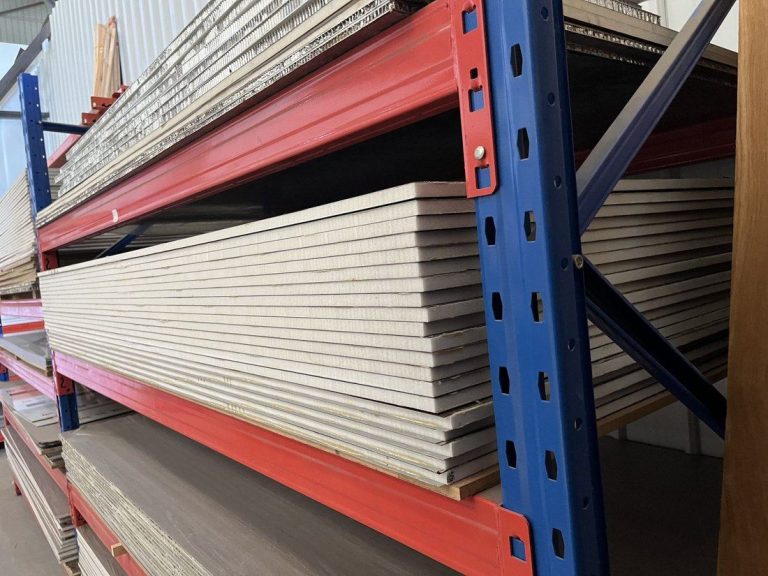
- Panel construction and thickness. Glass-reinforced plastic (GRP) or steel skin over polyurethane foam, in 50 mm, 75 mm or 100 mm. Thickness determines what the body can hold: 50 mm for chilled distribution, 75 mm for general frozen work, 100 mm for deep-frozen and long dwell times in high ambient.
- Floor condition. Stainless steel or aluminium tread plate over plywood is standard. Check for soft spots, delamination and corrosion along the rear sill and wheel arches — the two places water sits.
- Door seals and hardware. Compress the gasket with a sheet of paper at six points around the frame. If the paper pulls out easily anywhere, the seal is gone and the unit will run continuously.
- Frame and sub-frame corrosion. Coastal vehicles and fertilizer or salt users rot from the inside out. Inspect the cross-members, not just the visible skin.
- Insulation moisture. Foam that has taken on water loses its K-value permanently and cannot be dried out. Tap the panels; a dull, heavy sound and a body that is heavier than its specification suggests both point the same way.
- Evaporator and defrost. Look for ice build-up patterns, blocked drain trays and corrosion on the coil fins. A blocked drain means water into the load space.
- Electrical installation. Standby (electric) operation is a frequent failure point on ex-fleet bodies — check the changeover, the cable condition and whether the plug type matches local supply.
- Registration and roadworthiness trail. For a body mounted on a chassis, the entity being sold must match the paperwork. For anything crossing a border, this is where the ITAC and NRCS questions begin.
4. The duty maths on a new body, worked through
If you decide to import a new body rather than buy used locally, the landed cost is predictable, which is more than can be said for a used unit with unknown refrigeration life.
Refrigerated bodies for goods vehicles classify under HS 8707.90 — bodies (including cabs) for the motor vehicles of headings 87.01 to 87.05, other. Two numbers govern the cost:
- Customs duty: 20% of the customs value. South Africa values imports on an FOB basis, not CIF — international freight and insurance are excluded from the duty base.
- Import VAT: 15%, charged on the Added Tax Value, which is the customs value plus a 10% uplift for non-SACU origin plus the duty already calculated.
Worked example, using a purely illustrative FOB value of R 200,000:
| Line | Calculation | Amount |
|---|---|---|
| Customs value (FOB) | — | R 200,000 |
| Customs duty @ 20% | R 200,000 × 20% | R 40,000 |
| Added Tax Value | R 200,000 + R 20,000 uplift + R 40,000 duty | R 260,000 |
| Import VAT @ 15% | R 260,000 × 15% | R 39,000 |
| Duty + VAT | — | R 79,000 |
On top of that, budget for freight, port and terminal charges, and clearing agent fees, which in South Africa commonly run to a few thousand rand per shipment. Note that the FOB figure above is illustrative only — it is not a quotation, and it is not derived from any current price list.
5. Shipping a body — not a truck — to Durban
Shipping a bare body is a different exercise from shipping a vehicle, and it is where most of the cost savings sit.
A 6 m to 8 m body can travel knocked down or partially assembled, which is what makes sea freight economic: the volume shipped is the panels and the frame, not an empty box full of air. Our guide to loading truck bodies into containers covers the 40HQ loading arrangements and the packing sequence in detail.
Three documents matter at the South African end: the commercial invoice with the HS code stated correctly, the packing list dimensioned to match what actually arrives, and a certificate of origin — the last of these determines whether a preferential rate is available, and it cannot be claimed after the declaration has been lodged. Clearance is normally handled by a licensed agent; if you are importing for the first time you will need a SARS customs client code before the first shipment.
Durban handles the majority of body imports from Asia; Cape Town and Johannesburg (via OR Tambo) are the alternatives. Inland delivery from Durban to Gauteng is a standard route and should be priced in from the start.
6. When a new body beats a used one
This is not an argument that new always wins. A used body bought locally, inspected properly and priced against the checklist above can be the right buy — particularly for a chilled distribution operator in Gauteng who needs capacity this month and has a workshop to handle the refrigeration risk. For the five-year cost comparison behind that decision, see our used versus new fleet cost breakdown.
A new body tends to win in four specific situations:
- You need a specification that does not exist second-hand. 100 mm panels for deep-frozen work in high ambient, a specific internal height, a side-door or partition layout, or a body sized to a non-standard chassis.
- The refrigeration has to be warranted. A used unit’s remaining life is unknown and uninsurable. On a cold chain contract with penalties, that risk is not worth the saving.
- The vehicle is right-hand drive and the body must match. RHD is the default in South Africa (see how right-hand-drive supply from China works), and body-to-chassis interfaces (mounting points, cab clearance, door positions) differ from LHD patterns. A body built for an LHD chassis frequently needs rework.
- You are building a fleet, not buying a unit. Repeatability — the same body, the same parts, the same service procedure across ten vehicles — has a value that a mixed second-hand fleet never delivers.
7. What we supply, and what we do not
We manufacture new refrigerated bodies and dry box bodies in Deqing, Zhejiang, China, and export them to African markets including South Africa. Panel thickness is selectable at 50 mm, 75 mm or 100 mm; bodies are built to the chassis interface drawing you provide; and units are configured for the refrigerant and voltage available at your site.
We do not trade in used bodies, do not hold second-hand stock, and cannot help with an ITAC permit application for a used part. If your requirement is genuinely a used body, the local South African market described in Section 2 is where to look — and the checklist in Section 3 is how to avoid the expensive mistakes.
If your requirement is a new body, or a body-and-chassis combination, send us the chassis model, the internal dimensions you need, the temperature range and the daily duty cycle. We will come back with a specification and a quotation.
Sources
- ITAC, Import Control Guidelines Pertaining to the Importation of Used or Second-Hand Vehicles, Trucks, Buses, Taxis, Coaches, Motorcycles, Engines, Gearboxes, Differentials and Used or Second-Hand Spares for Heavy Duty Trucks (Import guidelines, January 2016) — itac.org.za. Accessed 25 November 2026.
- South African Government, Importing a second-hand or used vehicle — gov.za. Accessed 25 November 2026.
- SARS tariff classification and rates for HS 8707.90 (20%) and HS 8707.10 (25%), with the ATV / 15% VAT method, as published in the SARS Harmonised Tariff Schedule and summarised by JLog (last verified 1 November 2026) — jlog.co.za. Accessed 25 November 2026.
- Used body and refrigerated truck asking prices: public listings on Gumtree South Africa, observed 25 October–26 October 2026, recorded 25 November 2026.