
Refrigerated trucks for hot climates
Above 35 °C ambient, a refrigerated body stops being a catalog item and becomes an engineering decision. Insulation, condenser capacity and door discipline decide whether cargo arrives intact — we specify all three against the temperature your route actually sees.
A refrigeration unit is sized for an ambient, and the brochure ambient is not yours
Every transport refrigeration unit carries its capacity against a rated ambient, typically a European or temperate-market figure. Move the same box to 40–45 °C and the physics change in three ways at once.
Condenser capacity falls
A condenser rejects heat to the surrounding air; the hotter that air is, the less efficient the rejection becomes. The unit does not fail — it simply delivers less cooling than its rating sheet suggests, exactly in the season when you need the most of it.
Run time and fuel rise
To hold the same set point, the compressor runs a larger share of every hour. Fuel or battery consumption climbs, and the duty cycle on components — clutches, fans, seals — lengthens across the whole system.
Door openings cost more
Every multi-stop urban route loses cargo-space cooling at each door opening. In a 45 °C street the re-entry pull-down takes visibly longer than in a temperate one, which is why floor plans, curtain type and door-seal condition matter more in hot markets than in cold ones.
What this means for the buyer
A body that is "adequate on paper" in a 25 °C market can be marginal at 45 °C. The answer is not a bigger unit alone — it is matching panel, unit and route together, which is the next two sections.
Insulation first, then unit
Refrigeration removes heat that got in. The cheapest capacity is the heat you never let in.
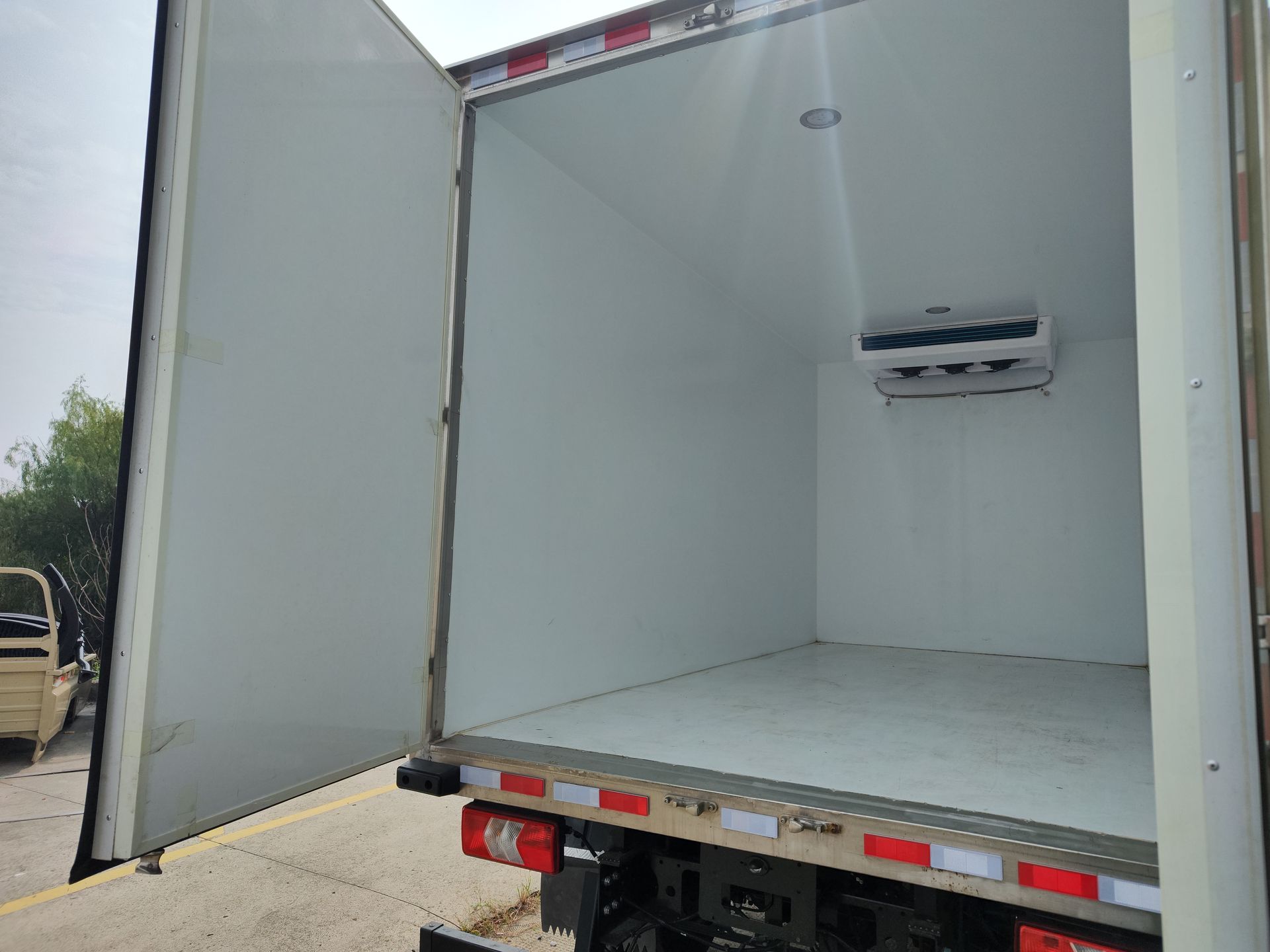
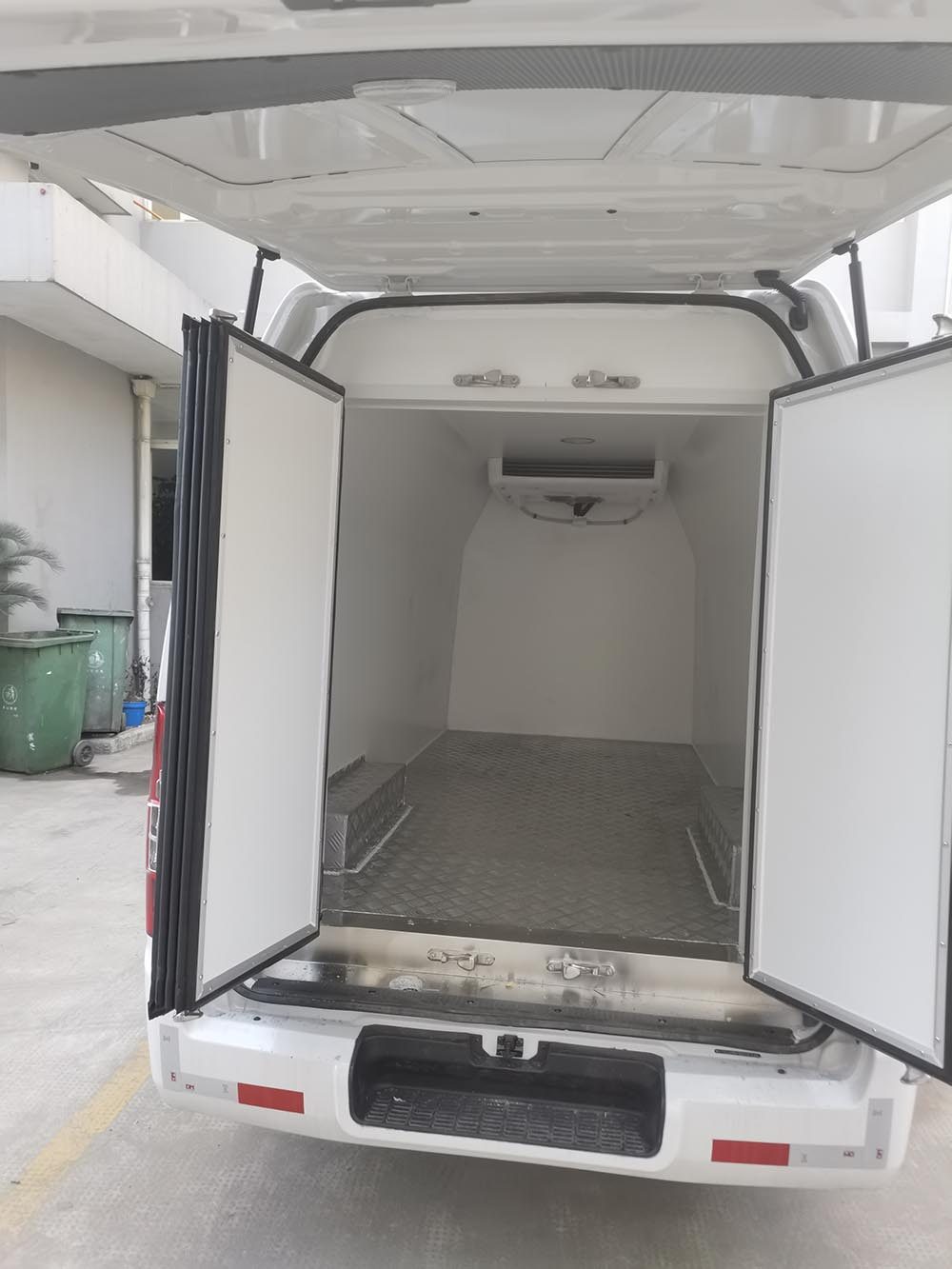
- Panel thickness is a choice, not a default — we build the same body platform with 50, 75 or 100 mm PU sandwich panels. For sustained high-ambient and frozen cargo we normally steer buyers to the thicker options; the trade-off is internal volume and payload, and it should be decided with your cargo, not by a price list. The selection logic is laid out in our 50 / 75 / 100 mm panel guide.
- Thermal bridges matter more in heat — the frame, floor and door openings are where heat finds a path past the panel. Our subframe and door-frame detail is specified against hot-market duty, and door seals are a stocked consumable we can ship with the spares kit.
- Temperature bands we build to — chilled 0 to +8 °C and frozen −18 °C as standard bands, with dual-temperature layouts available where one vehicle serves both. Pharmaceutical bodies follow the same logic with tighter control.
Sizing discipline, not brand loyalty
Carrier and Thermo King units are the easiest to service across most hot-climate markets, because the dealer and parts networks are already there. Chinese units cost less up front and perform well on short urban routes, but the service question returns at year three. We quote both and tell you which we would pick for your route — and why.
Where you operate decides the margin you need: the unit that is comfortable on a Mombasa coastal run needs re-thinking for the Sahel in April. Tell us the route at enquiry stage and we will size against it.
Our honesty policy on hot-climate performance
What we can state today
We can state the construction facts: panel options and thicknesses, unit brands and model ranges, temperature bands, chassis classes and the certification documents behind them. These are verifiable on the certifications page before you commit to anything.
What we will not do
We will not quote a "pull-down time at 45 °C" or a cooling-capacity curve we have not tested. Where a unit manufacturer publishes performance data for your ambient, we will pass it on with the source. Where we do not have it, we say so — and design the margin in conservatively instead.
If you need tested figures for a tender, raise it at enquiry stage. We would rather scope the test honestly than hand over a number that fails your acceptance check on arrival.
Three weight classes, built the same careful way
The hot-climate specification — thicker panels, unit matched to ambient, spares kit — is available across the range.
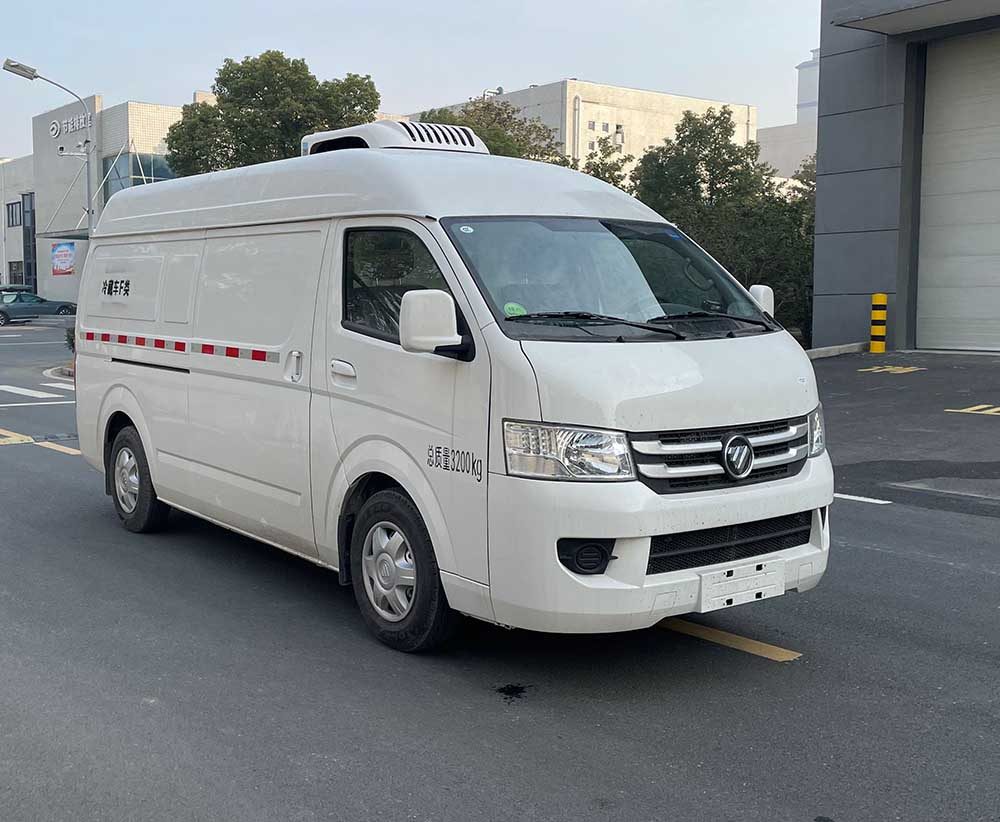
- 3.1 m city class — ZMS5030XLCBJ3: 3,200 kg gross vehicle weight, 870 kg rated payload. Multi-stop urban delivery where door openings are frequent and the street is hotter than the highway.
- 4.1 m light class — ZMS5040XLCBJ1: 4,495 kg gross vehicle weight, around 1,100 kg payload. The volume seller for distributor fleets across West Africa and the Gulf corridor.
- 9.6 m long-haul class — ZMS5180XLCBJ1: 9.6 m body on an 18-tonne class chassis, for port-to-cold-store trunking where sustained highway speeds in high ambient are the whole job.
Market-level notes sit alongside this page: see refrigerated trucks for Africa and refrigerated trucks for Nigeria for route- and market-specific detail.
Tell us the temperature you actually drive in
Cargo, temperature band, daily distance, and the highest ambient your route sees in the worst month. With those four answers we can specify panel and unit honestly.
Before you commit anything: download the full CCC certificate & model list (PDF) — 20 certificates covering 36 announcement models, with validity dates, reproduced from the certificate register.
Prefer to talk? WhatsApp +86 188 5789 9339 or email [email protected]. For shipping and loading practice, read the container loading guide.