
Off-road motorhomes for Africa
An African overland route asks three things of a motorhome: a base vehicle that can be serviced in-country, living systems that run without a hook-up for days, and a body that survives corrugations. We build on Toyota, Ford and MAN bases with all three in mind.
Africa breaks motorhomes in ways a spec sheet does not show
Touring-grade "off-road" styling is common; surviving a season of African routes is rarer. The difference sits in four places.
Corrugations
Washboard roads shake a body loose from the inside out — cabinets, wall linings, water fittings and window frames all take the load. Our furniture and lining systems are fastened for that duty, and the composite body is mounted on a flexible subframe rather than hard-bolted to the chassis.
Distance from service
A breakdown is measured in hundreds of kilometres, not in phone calls. That is why the base vehicle matters more than the floor plan: it decides whether filters, brake parts and tyres exist in the towns you will actually pass through.
Fuel and power quality
Fuel quality varies and shore power does not exist where you will want to stop. Every electrical and gas system on our builds is designed around the assumption that you generate, store and convert your own power — see the systems section below.
Heat and dust
High ambient and fine dust stress seals, electronics and air systems. For the desert-specific picture — Gulf conditions in particular — see the separate desert motorhome page.
Toyota, Ford and MAN — chosen for parts availability first
We are an MIIT-licensed body builder: we take the chassis and build the living module on it. Each base we offer is in the market for a reason.
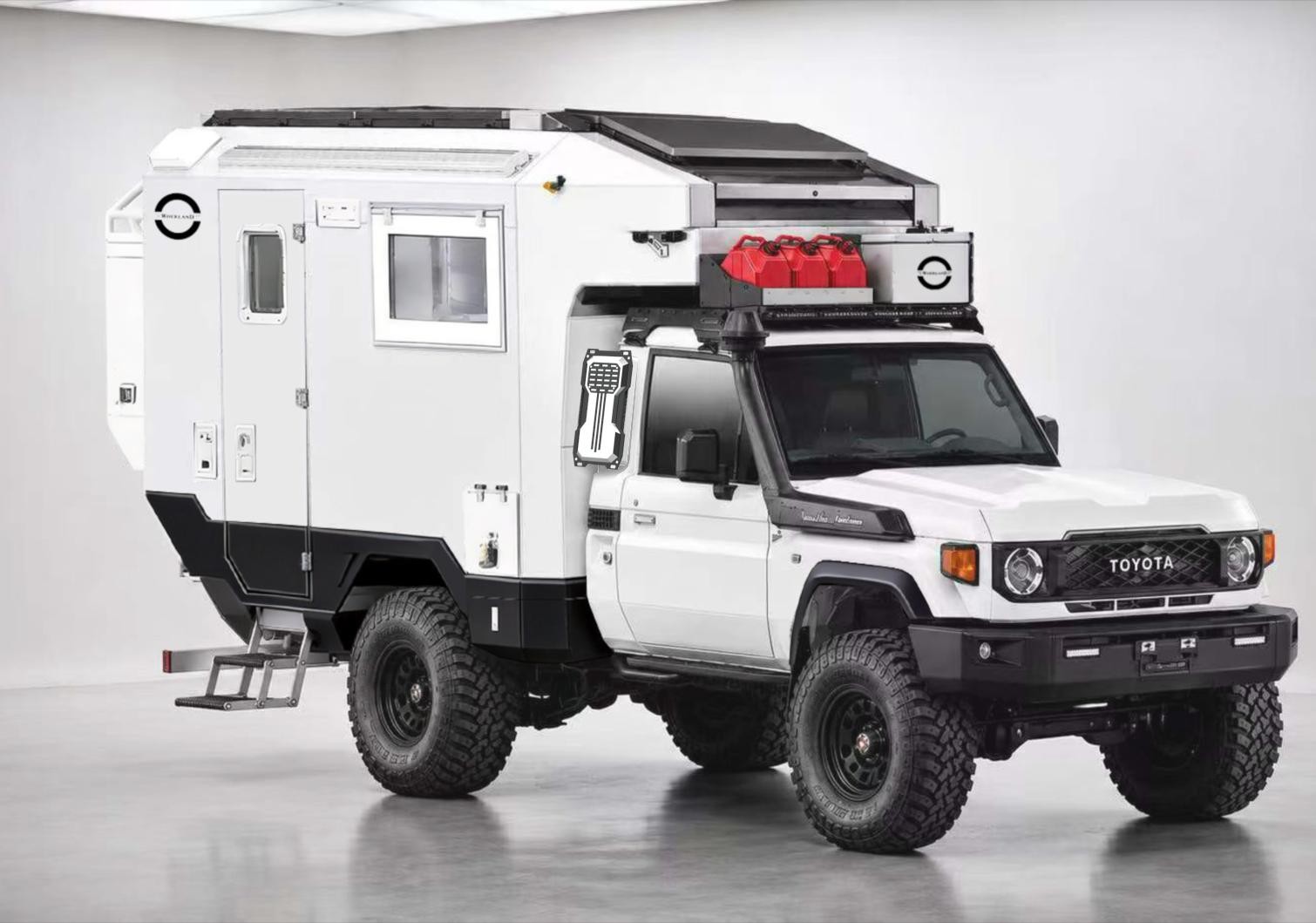
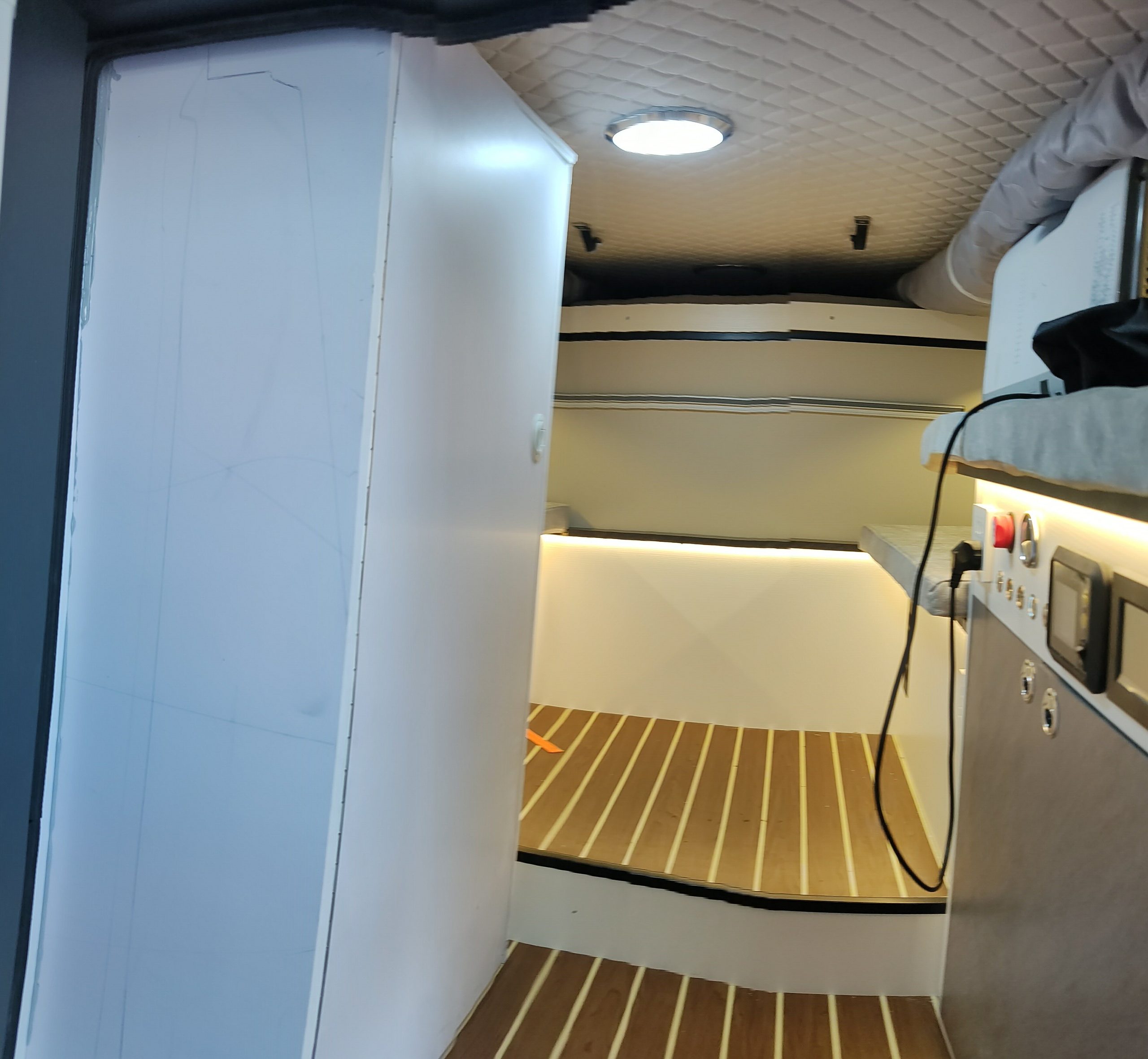
- Toyota LC79 — ZMS5033XLJLC6: the Land Cruiser 79 platform is the reference for remote-area work across East and Southern Africa for a reason — parts and expertise exist almost everywhere the roads are worst.
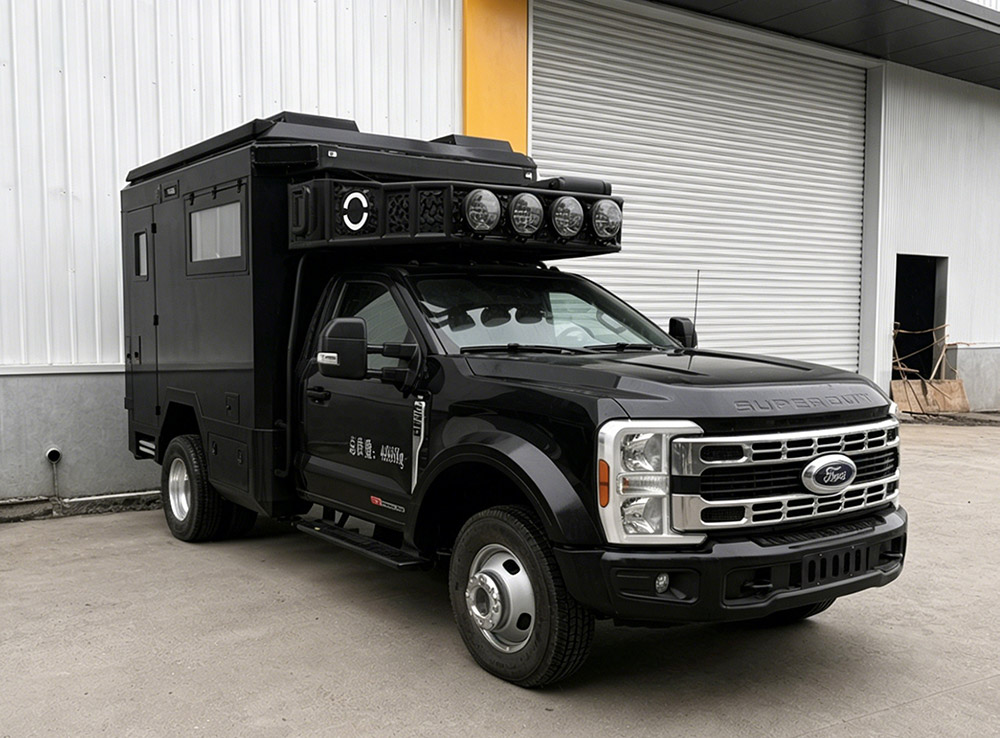
- Ford-based — ZMS5040XLJFSD: 4,498 kg gross vehicle weight on a light 4x4 base, a practical entry point for two-person travel with a full living module.
- MAN 4x4 — ZMS5130XLJM6B and ZMS5120XLJM6BS: single and double cab expedition layouts for long-range, heavier builds where payload and serviceability both matter.
For a deeper comparison of the platforms — Toyota, Ford, MAN and Mercedes-Benz — read our off-road motorhome base comparison. The full range sits under RVs & motorhomes, with the off-road class split out under off-road motorhomes.
Power and water sized to your route, not to a brochure
Every off-grid system is a budget: what the appliances draw, for how many days, with what recharge. We size solar input, battery bank and inverter against the load list you confirm at order stage — not against a generic "expedition package".
Water follows the same discipline: tank volume is matched to crew, days between refills and the climate you travel in. Cooking, heating and hot-water energy can be diesel, gas or electric — each has trade-offs in fuel availability and ventilation, and we will talk you through them before the build, not after.
One factory, from chassis handover to finished vehicle
How it is built
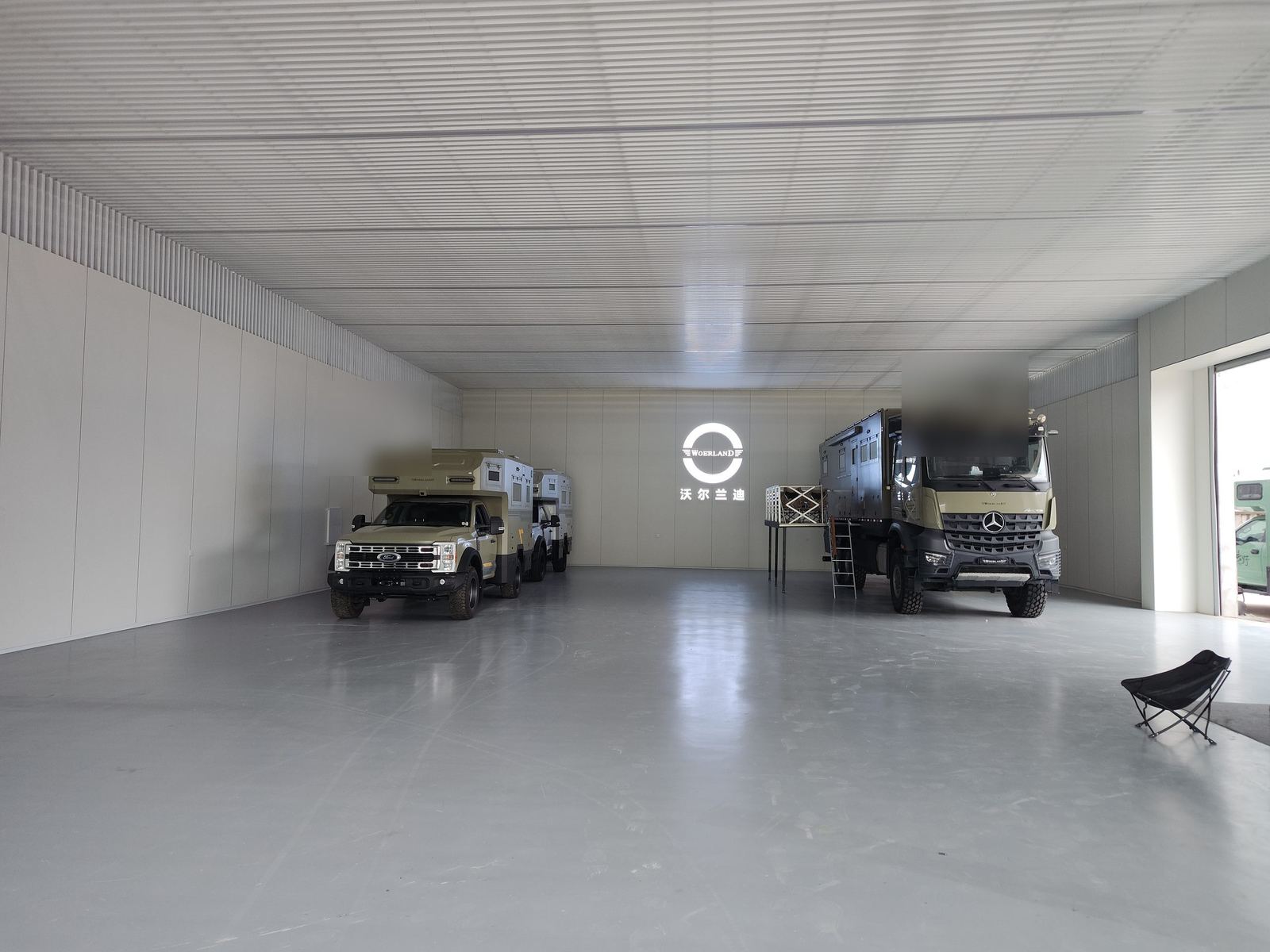
The living module is an insulated sandwich-composite body produced in our own workshop in Deqing, Zhejiang — the same hall and quality system that builds our refrigerated truck bodies. Furniture, glazing, electrical and water systems are fitted under one roof, so responsibility does not split between suppliers.
Approval and documents
Our motorhome models carry MIIT announcement numbers and CCC certification — across the product range we hold 20 CCC certificates covering 36 announcement models, with the motorhome class listed in full on the certifications page. Export shipping runs from Shanghai and Ningbo; the practicalities are covered in our China-to-Africa shipping guide.
Registration requirements differ by country. Send us your destination and we will state plainly which documents we can provide and which steps stay on your side — we do not promise registrations we cannot support.
Start with the route, not the floor plan
Crew size, the routes and countries on your plan, how many days off-grid between refills, and any base vehicle you already prefer. With those answers we can point you at the right base and size the systems properly.
Before you commit anything: download the full CCC certificate & model list (PDF) — 20 certificates covering 36 announcement models, with validity dates, reproduced from the certificate register.
Prefer to talk? WhatsApp +86 188 5789 9339 or email [email protected].