
Off-Road Motorhome Bases Compared: Toyota, Ford, MAN and Mercedes-Benz
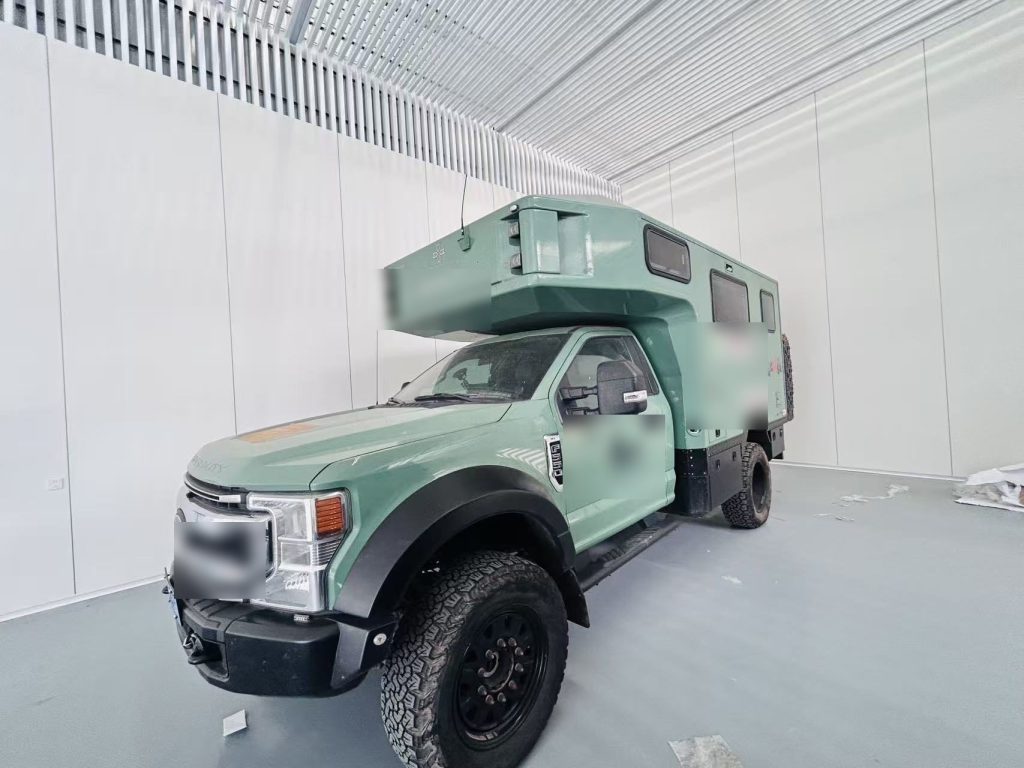
In an off-road motorhome, the house is the easy part. What actually decides whether the vehicle comes home is the base vehicle underneath it — its payload, its drivetrain, and above all whether you can get it repaired in the places you will actually drive. Having built motorhomes for export markets, here is how the four platforms buyers ask about most compare in practice.
Toyota Land Cruiser (79 Series pick-up)
The default answer for Africa, and for good reason.
- Parts and service reach: few vehicles on earth have a deeper parts network across East, West and Southern Africa. Any town with a fuel station usually has someone who can fix a Land Cruiser.
- Mechanical simplicity: leaf springs, proven turbo-diesel engines, minimal electronics — exactly what you want a thousand kilometres from the nearest dealer.
- The trade-off: payload. The LC79 pick-up is a one-tonne class platform, so the motorhome box it can legally carry is modest. Expedition builds on this base are compact by necessity — great for two travellers, tight for a family.
Best for: overland couples and small families who prioritise reaching remote places over interior volume, especially where the route runs through genuinely remote regions.
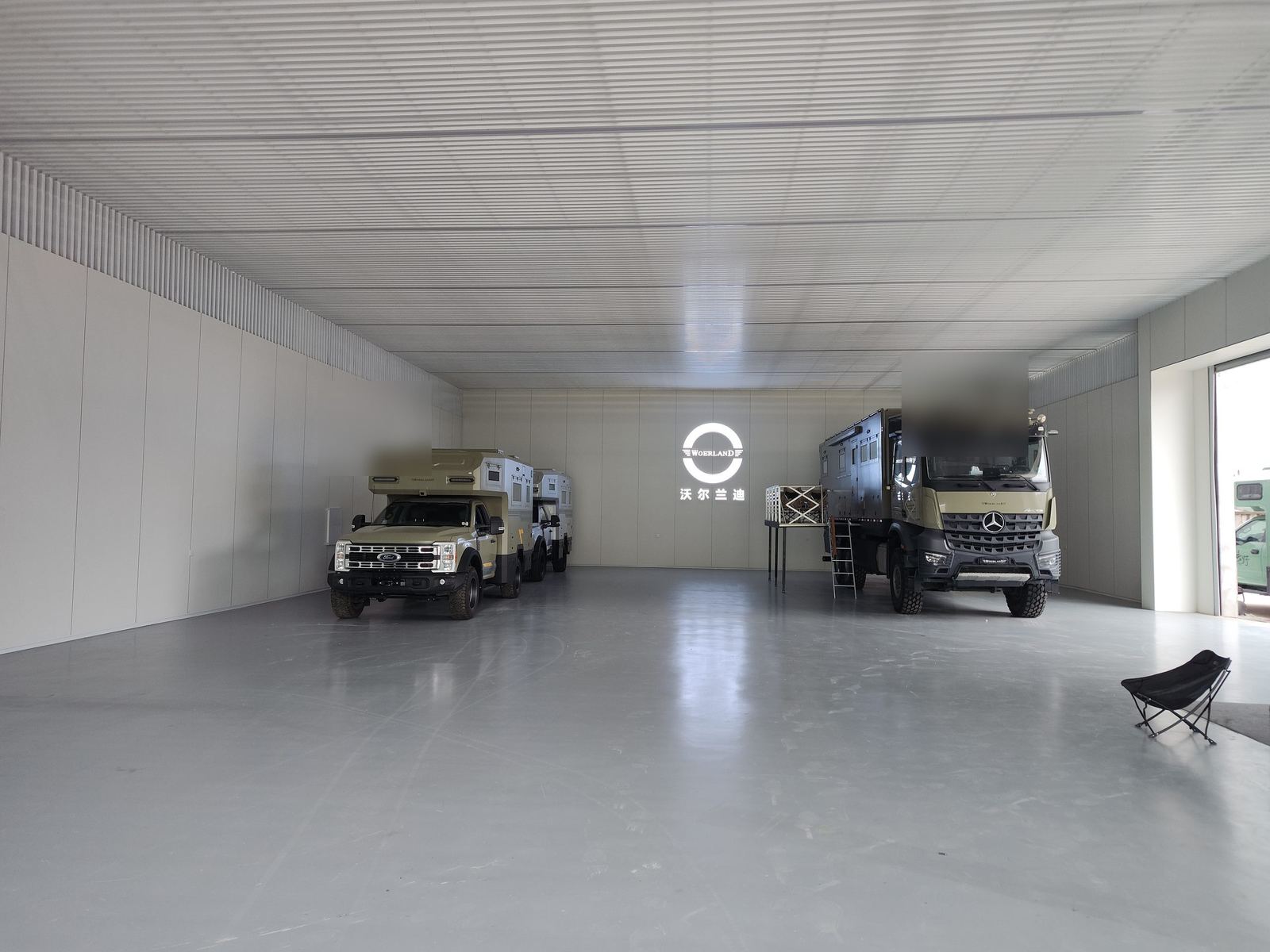
Ford (Ranger and F-Series based builds)
Ford bases have grown fast in the adventure-vehicle world.
- Ranger-based builds: a modern, widely sold platform with good dealer coverage in East and Southern Africa and strong aftermarket support. Comfortable to drive on tarmac between off-road stages.
- F-Series based builds: in markets influenced by North American vehicle culture, F-Series chassis carry much larger boxes — more water, more battery, more living space. The cost is width and fuel appetite; some African city streets and ferries were not designed for them.
Best for: buyers who want a newer, more comfortable platform with solid dealer networks, or who specifically want the bigger footprint of an F-Series build.
MAN (TGM class)
The serious expedition choice.
- Payload: a MAN TGM-class chassis carries what the pick-up platforms simply cannot — full-size expedition boxes with proper bathrooms, large water tanks and real range.
- Durability: European heavy-truck engineering, designed for continuous professional use.
- The trade-offs: price, size and route restrictions. A TGM-based motorhome is a large vehicle — certain tracks, ferries and city centres are simply off the menu, and operating costs are higher across the board.
Best for: full-time travellers and small expedition teams who need genuine living space and range, and whose routes favour major roads and tracks over technical single-track terrain.
Mercedes-Benz (Unimog and Sprinter 4×4)
Two very different answers sharing one badge.
- Unimog: the most extreme capability of the four — portal axles, extraordinary approach angles, near-military durability. Also the most expensive to buy, and its truck-style cab and gearing divide opinion as a daily driver.
- Sprinter 4×4: the comfortable middle path — van-like usability, widely serviced wherever Mercedes light commercials are sold, enough off-road ability for graded tracks and moderate terrain rather than hard expedition routes.
Best for: Unimog for buyers whose routes demand maximum terrain capability; Sprinter 4×4 for buyers who want one vehicle that commutes, tours and handles light off-road duty.
Side-by-side summary
| Criterion | Toyota LC79 | Ford Ranger/F | MAN TGM | Mercedes Unimog/Sprinter |
|---|---|---|---|---|
| Payload for the box | Small | Small–medium | Large | Small (Sprinter) / Large (Unimog) |
| Terrain capability | Excellent | Very good | Good (limited by size) | Excellent (Unimog) / Good (Sprinter) |
| Parts network in Africa | Deepest | Good (varies by market) | Moderate — European truck lanes | Good, strongest in cities |
| Buy and run cost | Moderate | Moderate | High | High |
| Living space achievable | Compact | Compact–medium | Full-size | Medium (Sprinter) / Full-size (Unimog) |
How to actually choose
Three questions settle most decisions:
- Where do you really drive? If the answer includes genuinely remote Africa, the LC79’s parts network is worth more than any specification on paper.
- How many people and how much water? Two people, 100 litres of water, two weeks — a pick-up base works. A family with a bathroom and air-conditioning needs a TGM-class platform.
- Who services it on your route? The best base vehicle is the one your route can support. Choose the platform with the shallowest recovery scenario, not the highest spec sheet.
Building with us
We build WOER LAND motorhomes as complete vehicles on chassis platforms with valid Chinese announcement coverage, and the build is quoted against a confirmed specification — final specifications follow the MIIT announcement (公告) for the complete vehicle and the confirmed build sheet before ordering. Tell us your route, your party size and your budget, and we will recommend the base class that fits rather than the one that sells.
Next step: browse the motorhome range or send your route profile through the Contact page.