
Pharmaceutical cold chain truck
A 2–8 °C vehicle is not a frozen truck set to a higher temperature. It is a body with tighter insulation, a unit that holds a narrow band under frequent door opening, and a temperature record you can hand to an auditor.
What GDP asks of the vehicle, and what it asks of you
Good Distribution Practice is a standard for the whole distribution process, not a certificate for a truck. Understanding where the vehicle sits inside it prevents expensive misunderstandings on both sides.
The 2–8 °C band
Most vaccines, insulins and biologicals must stay between 2 and 8 °C from the moment they leave the cold room. The vehicle has to hold that band through loading, a delivery round with repeated door openings, and standstill in traffic at 40 °C ambient. Excursions are usually caused by door discipline and insulation — not by the refrigeration unit being undersized.
Documentation
GDP expects a temperature record over the whole journey, with excursion alerts and a deviation procedure. That means a logger with a downloadable trace, an alarm that is loud enough to act on, and a pre-cool step before loading. A printed specification is not a substitute.
What we do not claim
We do not hold a GDP certificate and we do not describe our vehicles as GDP certified. What we can do is build the body to meet GDP temperature-control requirements, supply insulation and pull-down data for validation, and fit the logging and alarm equipment your quality team specifies.
Where validation sits
Thermal validation of a route — mapping, worst-case door openings, seasonal ambient — is normally done by the distributor, not the body builder. We support it with build data and, if you need it, a witnessed pull-down test before shipment.
One compartment or two, decided by the delivery round
A dual-zone body costs more, weighs more and takes volume from both zones. It is the right answer only when one vehicle genuinely has to carry two products at once.
Single zone
One compartment, one unit, one set-point. Simpler to validate, cheaper to buy, more usable volume for the same overall length. Correct when a route carries one product family — a vaccine round, a single distributor's stock, a clinic delivery schedule that does not mix frozen and chilled.
Dual zone
A movable or fixed bulkhead splits the body into two independently controlled compartments, typically 2–8 °C plus a frozen section at −18 °C, or two chilled zones at different set-points. Each zone needs its own evaporator and its own record. Justified when one vehicle must serve both a pharmacy chain and a frozen-goods customer.
If you are unsure, describe the daily round and we will tell you which structure makes sense — including when the honest answer is two single-zone vehicles instead of one dual-zone.
Insulation is where the temperature band is actually held
Thickness is not a marketing number. It sets how fast the body gains heat when the doors open and how hard the unit has to work to recover.
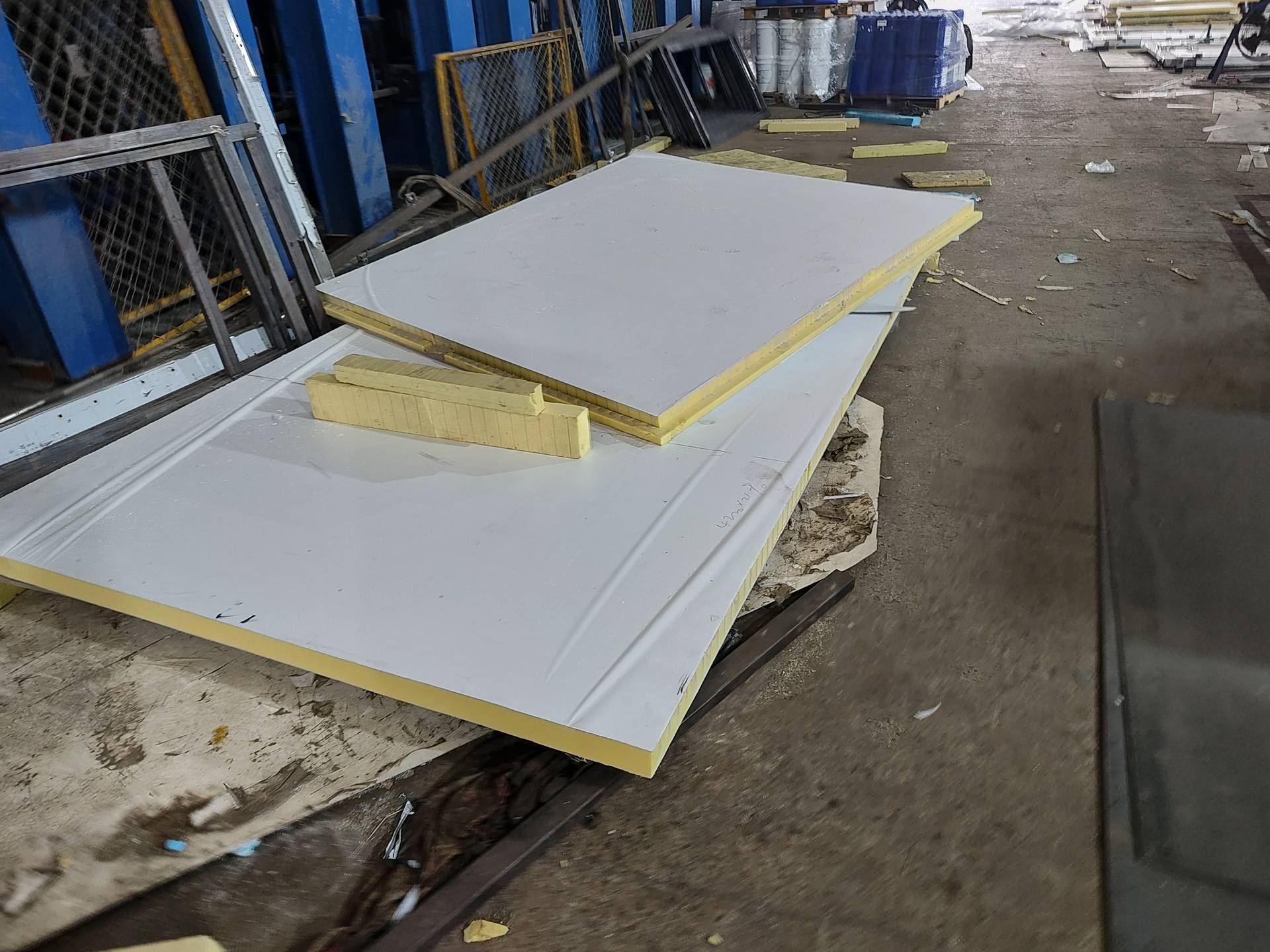
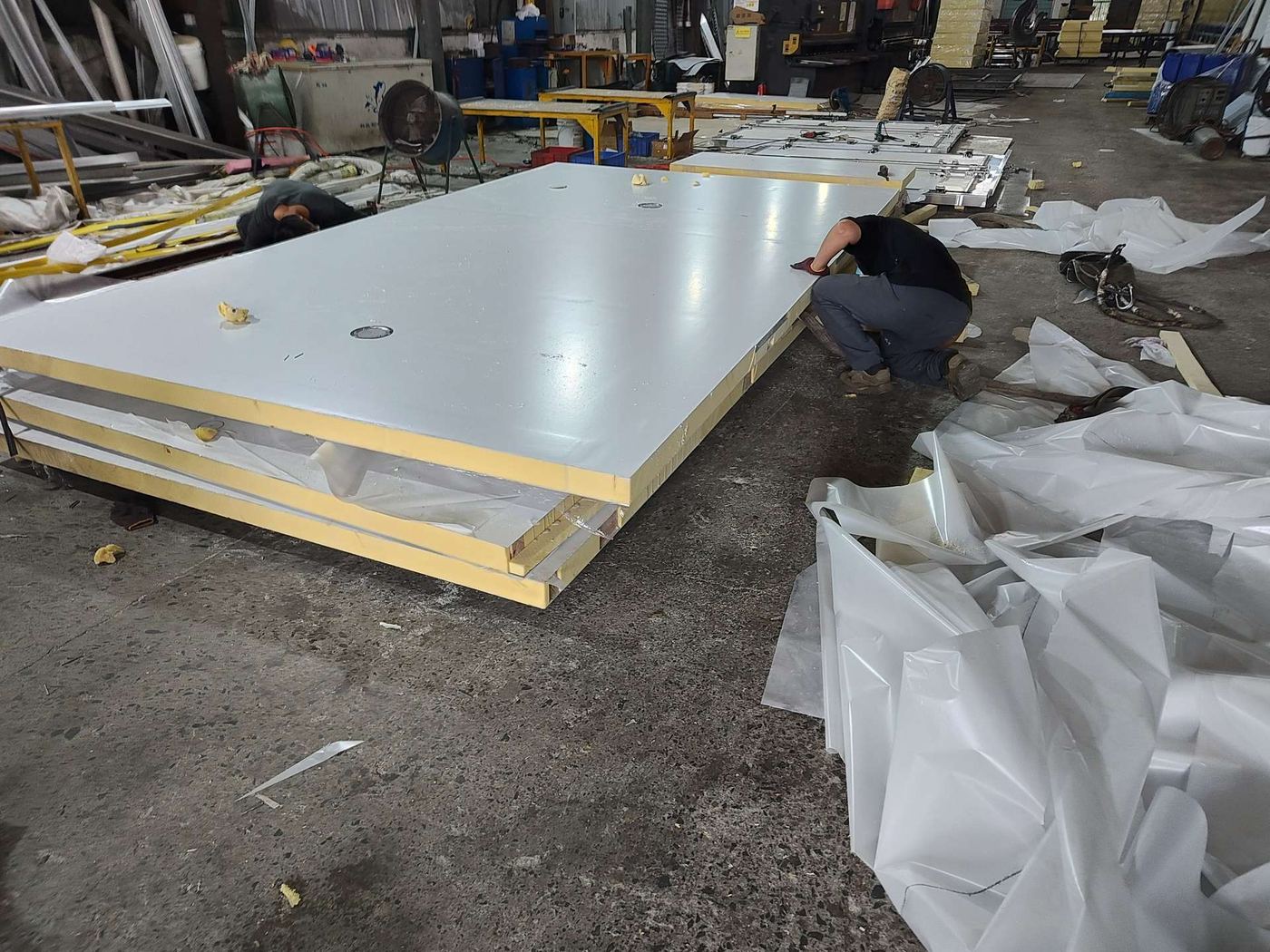
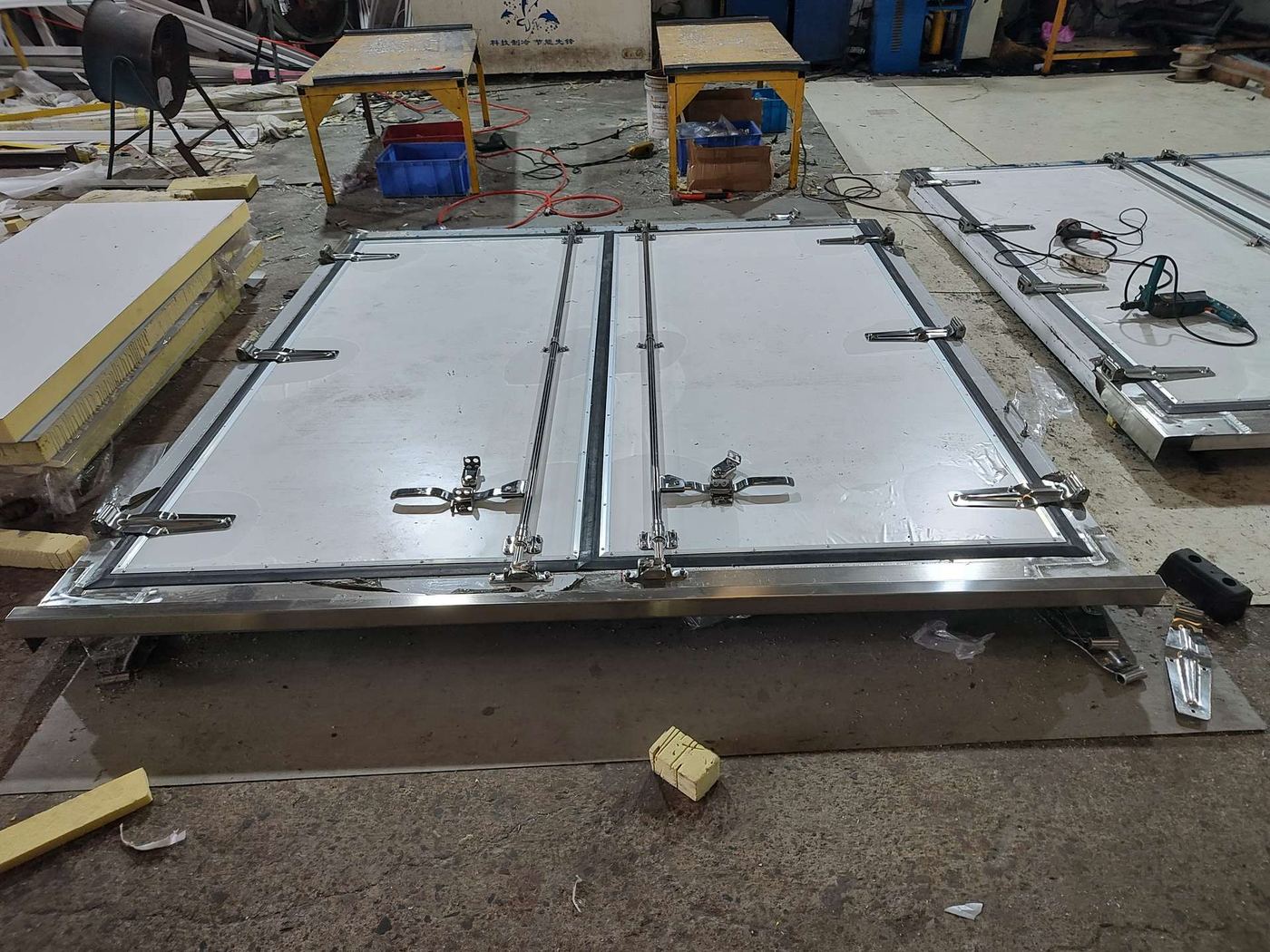
50, 75 or 100 mm
Panels are FRP-skinned polyurethane sandwich, produced in-house at 50, 75 and 100 mm. For chilled pharmaceutical work in a hot climate, 75 mm is the usual starting point and 100 mm is specified where the body must hold band through long standstill periods or repeated door opening. The measured comparison between the three thicknesses is set out in this article — with the numbers we can actually stand behind.
Fittings that matter in pharma use
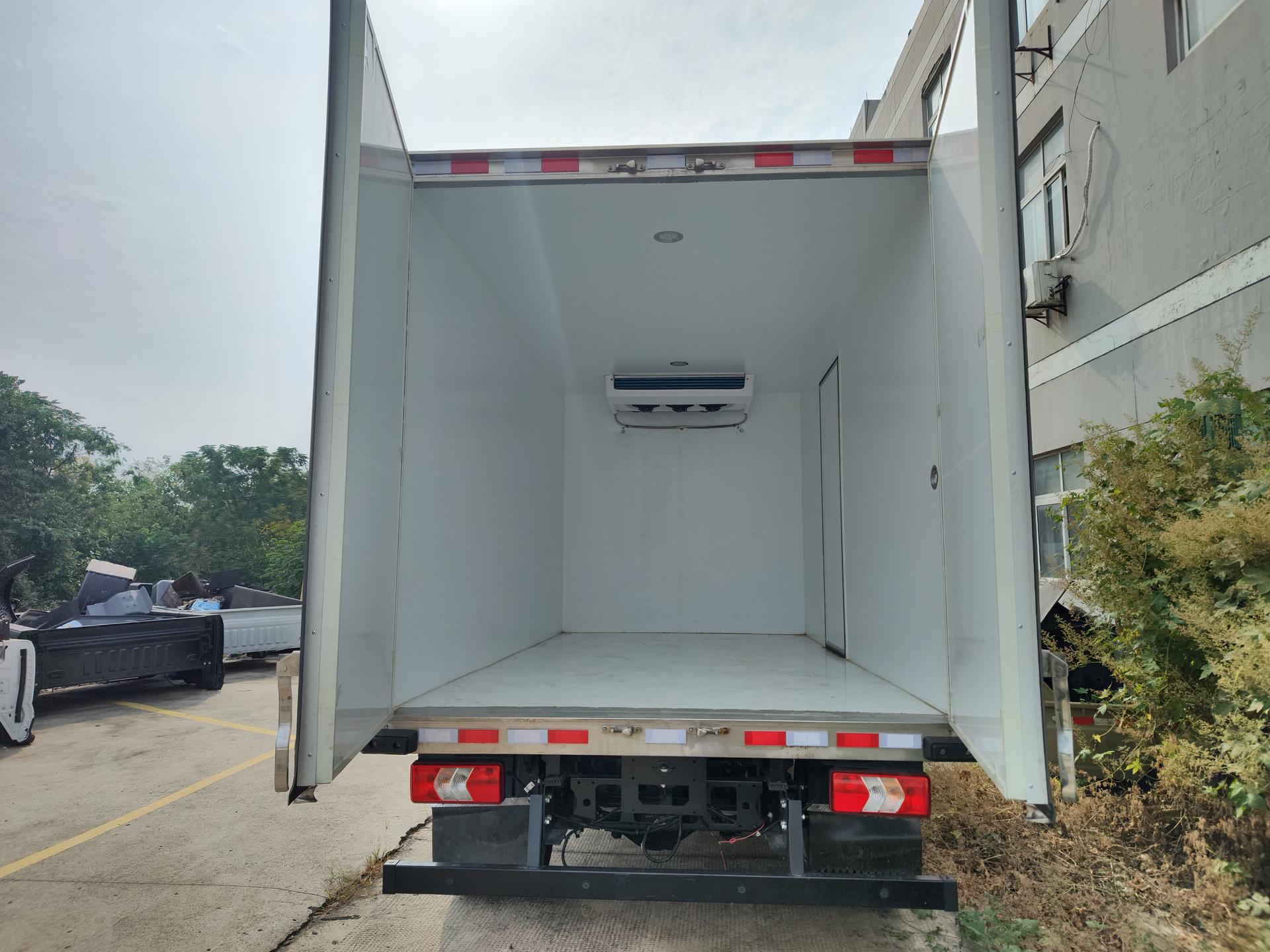
Sealed door gaskets, stainless or food-grade floor, coved internal corners that can be washed, and a door switch wired to the alarm. Interior lighting is specified so that a pharmacist can read labels without propping the door open — an open door is the most common cause of an excursion.
A temperature trace, not a temperature display
A digital display on the unit shows what the return air is doing right now. An auditor wants a file: time-stamped readings across the whole journey, with alarms and the actions taken. We prepare the wiring and mounting for a logger and door alarm your quality team specifies, and can supply a unit with data output if you prefer to standardise on one.
Practical detail: put the logger where it measures product temperature, not where it is convenient to read. A probe in the door well will record every opening and tell you nothing about the cargo.
Which vehicle class fits a pharmaceutical round
Vaccine and pharmacy rounds are usually city or regional, not long-haul. That points to the light classes, where a single driver and a tight turning circle matter more than payload.
- ZMS5030XLCBJ3 — 3,200 kg gross vehicle weight, 870 kg payload, 3.1 m body. For clinic and pharmacy rounds in dense urban areas.
- ZMS5040XLCBJ1 — 4,495 kg gross vehicle weight, around 1,100 kg payload, 4.1 m body. The usual choice for a distributor serving a metro area, and the class where dual zone is most often specified.
- ZMS5180XLCDF1 — 7.8 m body on an 18-tonne class chassis. For regional distribution between a central cold store and provincial depots.
All three are MIIT-announced and CCC covered; the certificates are listed on the certifications page. Our refrigerated range as a whole is under refrigerated trucks. If your quality team has a specification document, send it — we will answer line by line rather than send a brochure back.
Send the temperature requirement and the round
Product list, band, number of drops, ambient range and whether the record has to be auditable. We will come back with a body specification you can validate against, and a price against that specification.
Before you commit anything: download the full CCC certificate & model list (PDF) — 20 certificates covering 36 announcement models, with validity dates, reproduced from the certificate register.
WhatsApp +86 188 5789 9339 · [email protected]. Note for regulated buyers: Zhejiang Miao Sheng Automobile holds a Class II medical device sales licence in China, which is a trading qualification — it is not a pharmaceutical distribution certification and we do not present it as one.