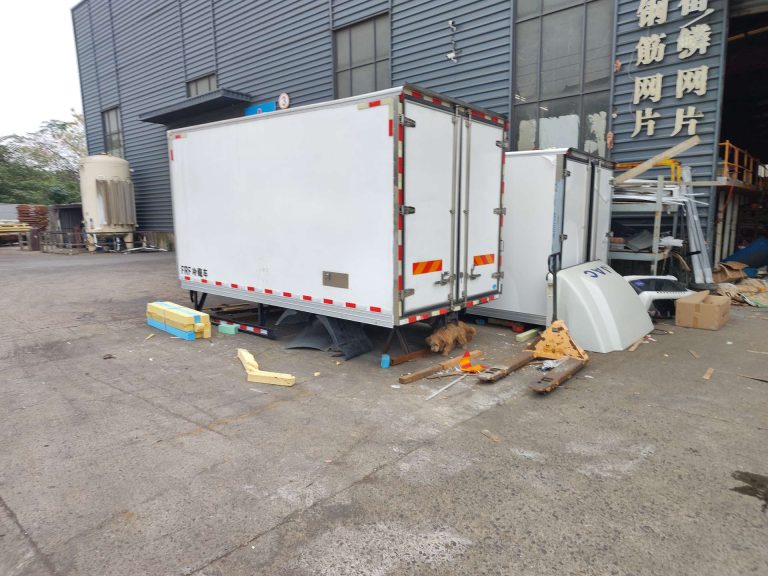
Choosing a Refrigerated Truck Body: 50, 75 or 100 mm Panels?
When buyers ask us for a quote on a refrigerated truck body, the first specification we discuss is not the reefer unit — it is the panel thickness. The sandwich panels decide how well your insulated truck body holds temperature in 40 °C ambient heat, how much payload you keep, and how long the body lasts on rough roads.
As a reefer body manufacturer exporting to Africa and the Middle East, we build bodies and supply insulated panels in 50 mm, 75 mm and 100 mm as standard options. This guide explains how to choose between them — the same logic applies whether you are buying a complete refrigerated truck or a body to mount on your own chassis.
What panel thickness actually does
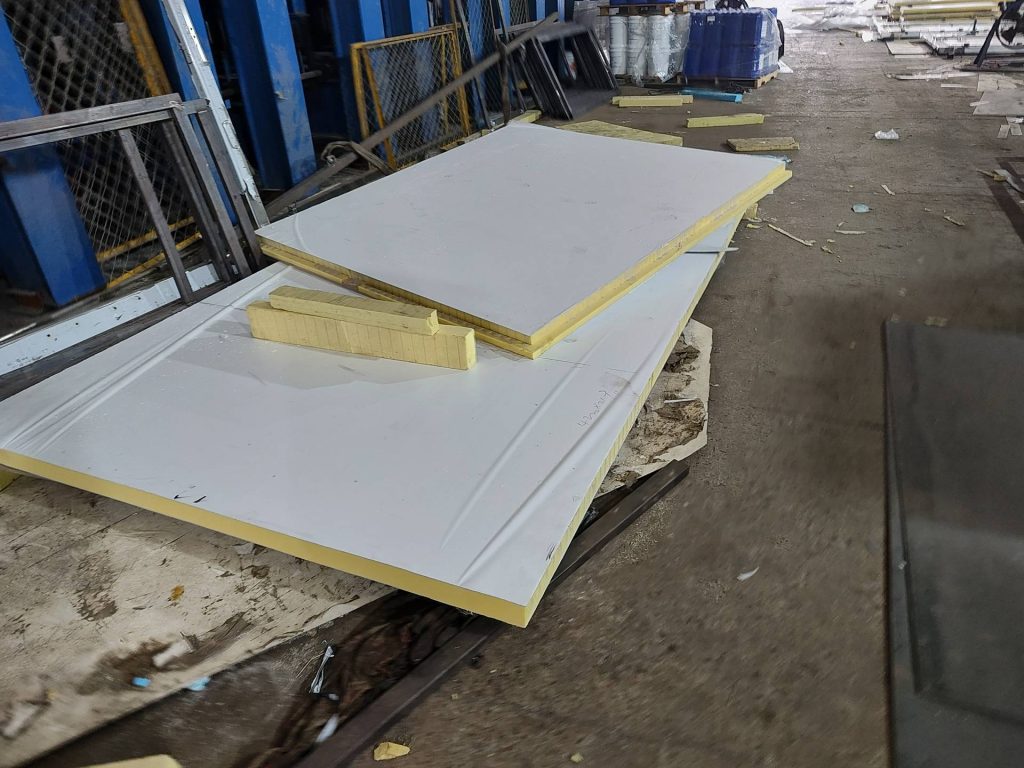
A refrigerated truck body is a sandwich structure: two skins of fiberglass (FRP) or steel, with a polyurethane (PU) foam core between them. The foam core is the insulation. Typical PU foam used in truck bodies has a thermal conductivity in the range of roughly 0.020–0.025 W/(m·K) — but the thickness of the core is what sets the total resistance to heat flow.
As a rule of thumb:
- Doubling panel thickness roughly doubles the insulation barrier against heat soaking in from outside.
- The skins add strength; the core adds thermal resistance. Thickness mainly buys you thermal margin, not strength.
That thermal margin matters most in exactly the markets we ship to most: high ambient temperatures, long door-open times at wet markets, and unreliable electricity at overnight stops.
The three thicknesses and what they are for
The table below is a common industry starting point. Your reefer unit supplier and your body builder should confirm the final combination for your route profile.
| Panel thickness | Typical duty | Typical cargo temperature | Notes |
|---|---|---|---|
| 50 mm | Chilled distribution in moderate climates | approx. 0 °C to +8 °C | Lightest, lowest cost, maximum cargo volume. Common for fresh produce, dairy and beverage runs with short door-open times. |
| 75 mm | The workhorse for frozen distribution | approx. −18 °C | The most requested thickness for African and Middle Eastern fleets. Balances insulation, payload and cost for multi-drop frozen goods. |
| 100 mm | Deep-frozen and extreme ambient duty | −25 °C and below | For long-haul frozen export loads, ice cream, and pharma cold chain where thermal margin is critical. Heaviest and reduces internal volume the most. |
Two practical notes:
- Hot climates push you one step up. The same body that holds −18 °C comfortably in a 25 °C climate will work much harder in 40–45 °C ambient with daily door openings. Buyers in the Gulf, the Sahel and West Africa commonly spec 75 mm where a 50 mm body might have sufficed in cooler markets.
- Temperature class of the reefer unit must match. A thicker panel cannot compensate for an undersized refrigeration unit — the two must be specified together. We confirm unit capacity and panel thickness as one decision, not two.
The trade-offs: space, payload and cost
Thickness is not free. Every 25 mm of extra panel takes a bite out of three things:
- Internal cargo volume. On a typical 4.2 m body, moving from 50 mm to 100 mm panels costs roughly 100 mm of internal length plus width and height — meaningful when every pallet position counts.
- Payload. Sandwich panels are light compared to a steel box, but the 100 mm option still weighs more. For payload-critical chilled distribution (beverages, produce), the extra insulation may be wasted weight.
- Cost. Thicker panels use more material and more pressing time. In a fleet purchase of 10–20 units, the difference is real money — which is exactly why you should not over-spec “just in case”.
The right answer is route-based: what temperature, what ambient, how many door openings per day, and what dwell time without plug-in power. Answer those four questions and the thickness usually picks itself.
Panels-only and CKD supply for body builders
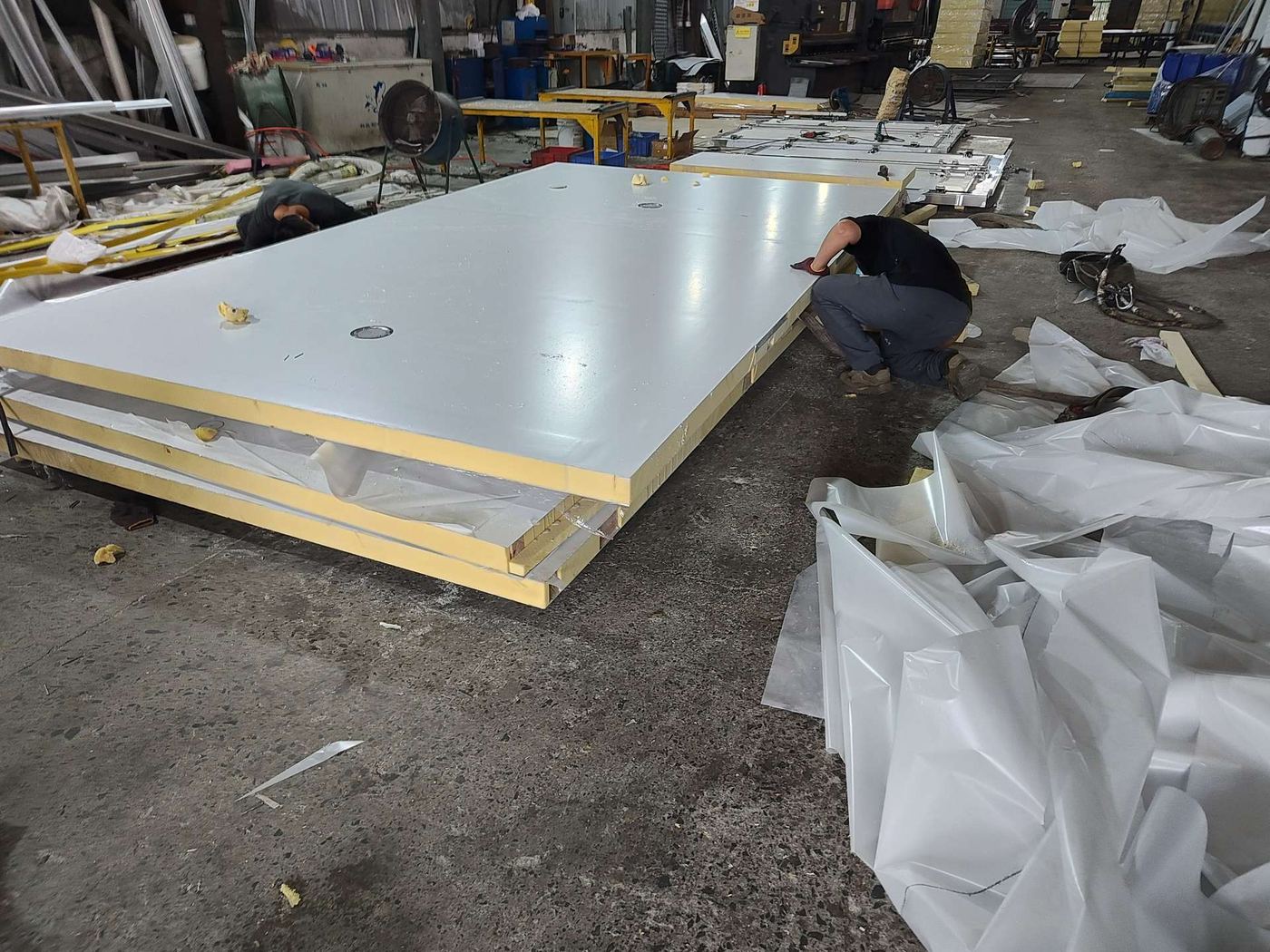
Not every buyer imports complete trucks. We also supply insulated box panels (for truck bodies and for cold-room style builds) to overseas body builders and workshops, in the same 50/75/100 mm options, for OEM assembly on local chassis. If you run a modification shop and want to build refrigerated bodies locally, panels-only or knock-down (CKD) supply reduces your shipping cost per body.
How we quote
Every body we build is quoted against a confirmed build sheet — dimensions, panel thickness, floor and door configuration, and the reefer unit brand — and final specifications follow the MIIT announcement (公告) for the complete vehicle and the confirmed build sheet before ordering. Tell us your cargo temperature, destination market and chassis (or let us supply the complete truck), and we will come back with a recommended thickness and a firm configuration.
Next step: send us your route profile through the Contact page or ask for the refrigerated truck body and insulated panel catalogues.
Specifying panels for temperature-controlled pharmaceutical loads? The body-side requirements are set out under pharmaceutical cold chain trucks.