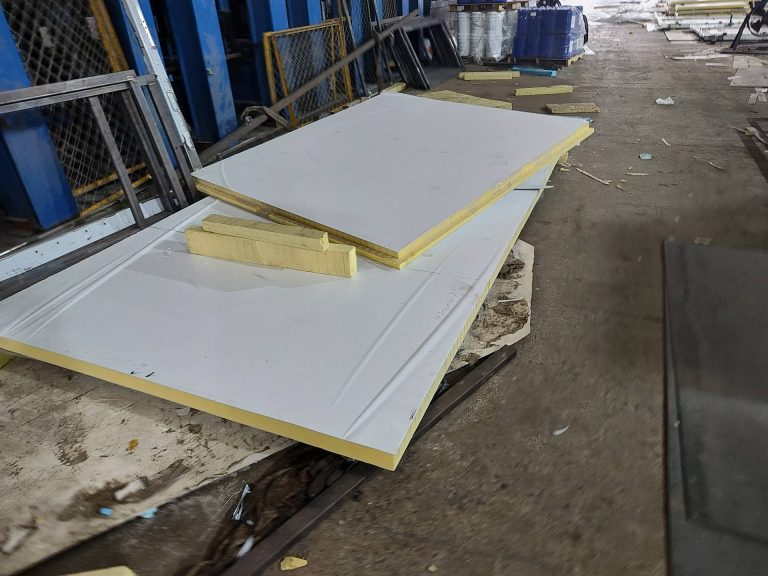
Container Loading a Truck Body: A Practical Guide
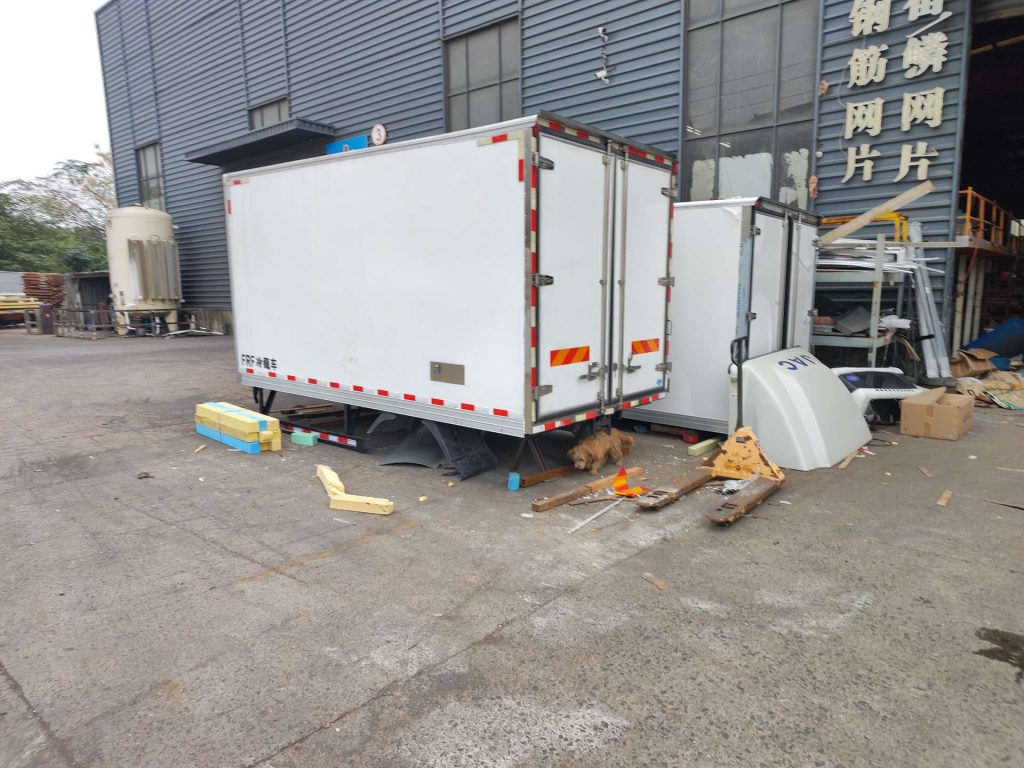
Most of the refrigerated truck bodies we ship leave the factory without a chassis. The buyer mounts the body on a locally sourced chassis — saving duty on a complete vehicle, matching a chassis brand their mechanics already know, and fitting far more value into one shipping container. But a body is a large, fragile-footed, high-value item, and a badly planned container loading can undo a perfectly good build. Here is how it works in practice.
Why bodies ship separately
For body-builders and fleet owners, the economics are straightforward:
- Duty: many markets tax a complete vehicle at a higher rate than a body or CKD kit. Importing the body and a chassis separately can reduce the total duty bill — always confirm the local tariff treatment first, as it varies by country.
- Chassis choice: mount on the chassis brand with the best local parts supply — Isuzu, Hino, Foton and JAC are all common hosts for imported bodies.
- Container density: a body-only shipment puts your money in insulated panels, not in wheels and a cab you did not need.
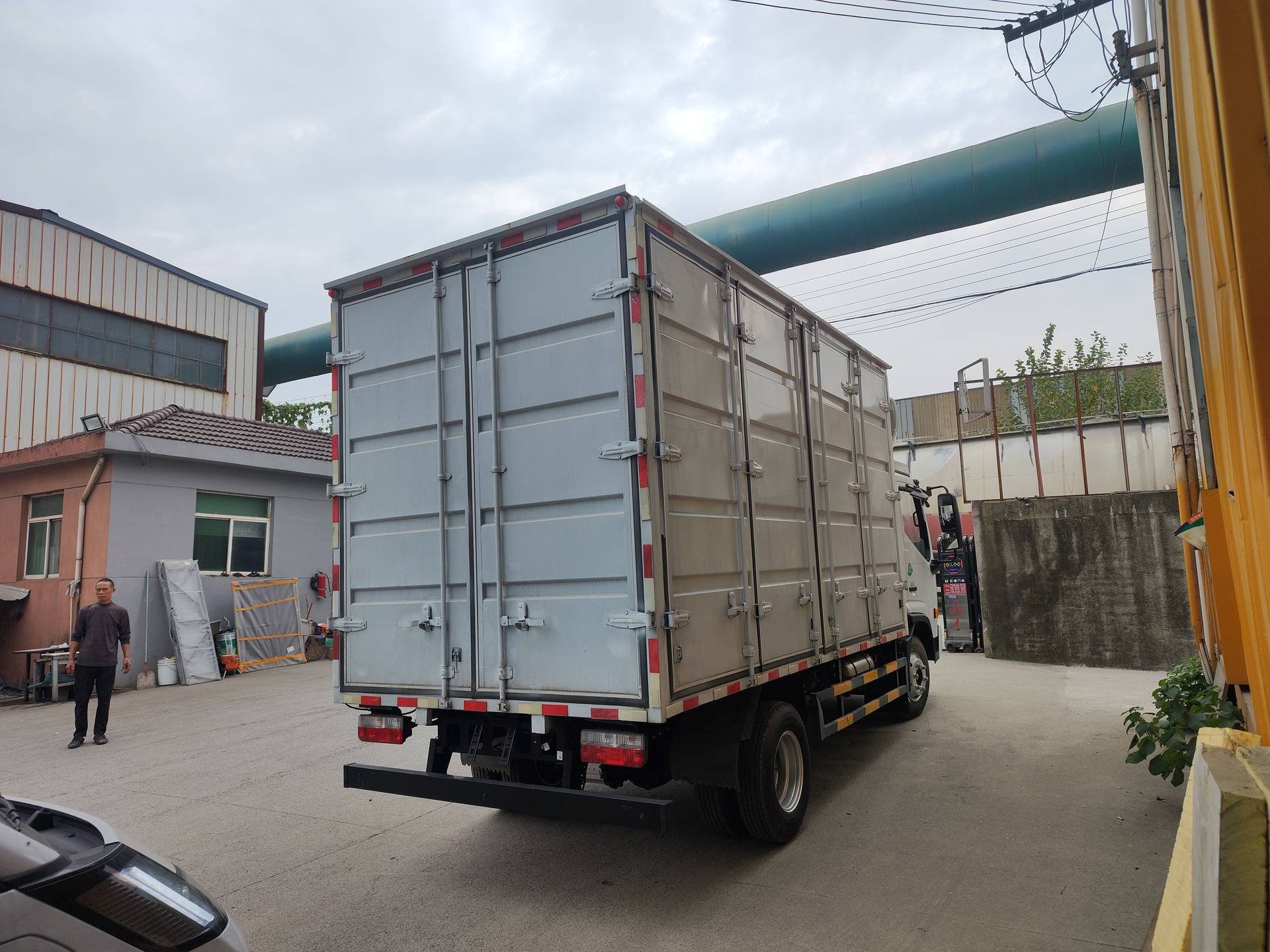
Choosing the container: 20GP or 40HC?
| Container | Approx. internal size (L × W × H) | Typical body fit |
|---|---|---|
| 20GP | ~5.9 × 2.35 × 2.39 m | Single small body up to roughly 4.5–5 m with low height, loaded lengthwise; loading ramp required |
| 40HC | ~12.0 × 2.35 × 2.69 m | One large body with working room on all sides, or multiple bodies / panel kits / spare panels combined — the most common choice for body shipments |
The width is the hidden constraint, not the length. A body built to fit a 2.3 m-wide chassis sits close to the internal width of a standard container, so side clearance for forklift manoeuvring and lashing is tight by design. This is exactly why body dimensions should be discussed with the shipping plan before the build is confirmed, not after — a 50 mm difference in body width can decide between a simple lengthwise load and a crane-and-slide operation.
How a professional loading is done
- Wooden skids under the body. The body never rests on its floor skin. Skids spread the load and give forklift and lashing points that do not touch the panels.
- Corner and edge protection. FRP skins chip. Foam corners and edge boards go on every exposed corner before anything is strapped.
- Doors braced closed. Rear doors are the body’s most flexible part; they are locked and braced so road and sea vibration cannot work them open.
- Lashing over the structure, not the skin. Straps and tension bars bear on the sub-frame and skids. A strap ratcheted directly against an FRP panel is how dents and delamination happen.
- Weight spread across the container floor. A body concentrates tonnes into a small footprint. Skids and load-spreading plates keep the container floor within its line-load limits — this is a carrier requirement, not a nicety.
- Reefer unit handled as its own item. On body-only shipments, the refrigeration unit usually travels separately crated (or pre-fitted where the plan allows), with its own packing list line.
The evidence you should expect
A container of insulated panels is invisible once the doors close. Before sealing, the loading team should produce:
- Photos of every stage: body on skids, lashing points, door bracing, corner protection, and the empty-space bracing at the container doors;
- A packing list that matches the photos, item by item — bodies, panels, spares, hardware kits;
- The container and seal numbers recorded on the documents.
If a supplier cannot offer this, the risk is not that loading will be done badly — it is that you will never be able to prove whose fault the damage was. Photo evidence is what turns a dispute into a claim.
On arrival
Check against the packing list before signing clean receipt with the carrier, or note exceptions on the delivery document. Insulated panels that survive the sea crossing usually arrive fine; the risky moments are the forklift at destination and the first unstrapping — so brief your receiving team on the corner protection and lashing points before the container is opened.
How we pack
Bodies and insulated box panels leave us with standard export packing: skids, edge protection, braced doors, lashing over structure, and a full photo record before the doors are sealed. Container choice and loading plan are confirmed with you during quotation, because body dimensions and shipping plan should be decided together.
Next step: tell us the body size and destination port, and we will confirm what fits, what it costs to ship, and what arrives in the box — start at the truck bodies and insulated panels pages or the Contact page.